
01 SimulationAI candidate · Senior Engineer
“I reassigned the tasks and kept the deadline.”
Managers and specialist interviewers practice structured questions, adaptive follow-ups, and evidence recognition against controlled AI candidate profiles before a real conversation depends on it.
Under Construction · Design-partner access is being prepared · Not yet an available product
“I reassigned the tasks and kept the deadline.”
Which follow-up would have established the candidate’s own contribution?
Built from interview and calibration practice. The concept draws on more than 300 conducted interviews and the training and calibration of engineers, managers, and senior leaders.
Strong interviewing is a craft: ask relevant questions, deepen answers, separate signals from impressions, and justify a decision transparently.
Comparability falls when every interviewer runs a different conversation.
Communication strength is easily mistaken for competence.
Real candidate profiles are rarely plannable or reproducible.
The simulation keeps candidate behavior stable, revealing how well the interviewer asks, probes, and classifies signals.
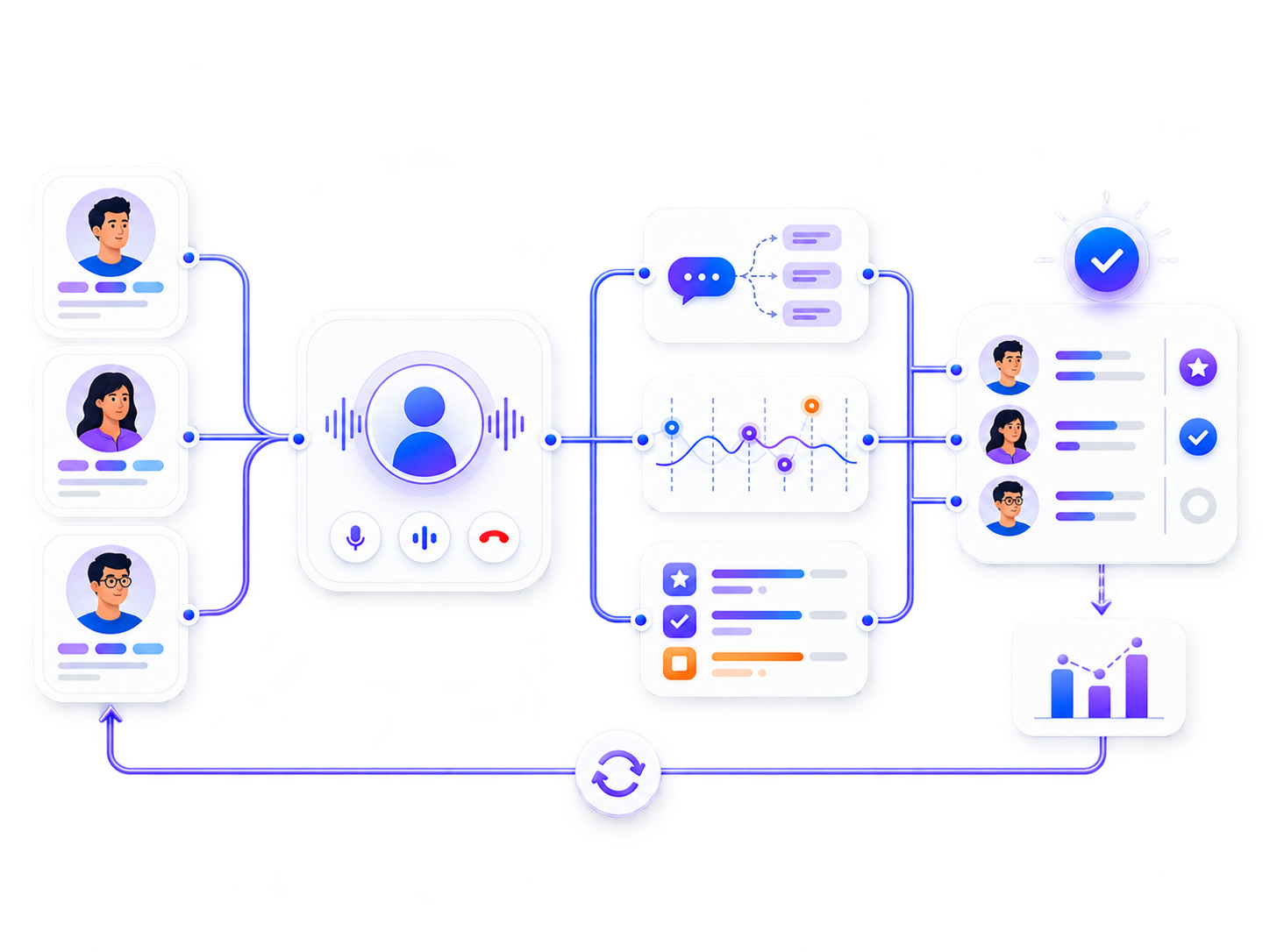
Predefined candidates vary content, communication, and difficulty reproducibly.
The interviewer structures the conversation and decides when to probe.
After the simulation, the interviewer records observed signals and reasoning.
Questioning and recognized signals are compared with profile and rubric.
The pilot concept is intended to help interviewers ask systematically, recognize relevant signals, and explain assessments against the company rubric.
The first hypothesis combines repeated 30-minute interviews, independent signal assessments, structured feedback, and deliberate repetition.
The scope is a design-partner plan to validate, not a performance or calibration promise.
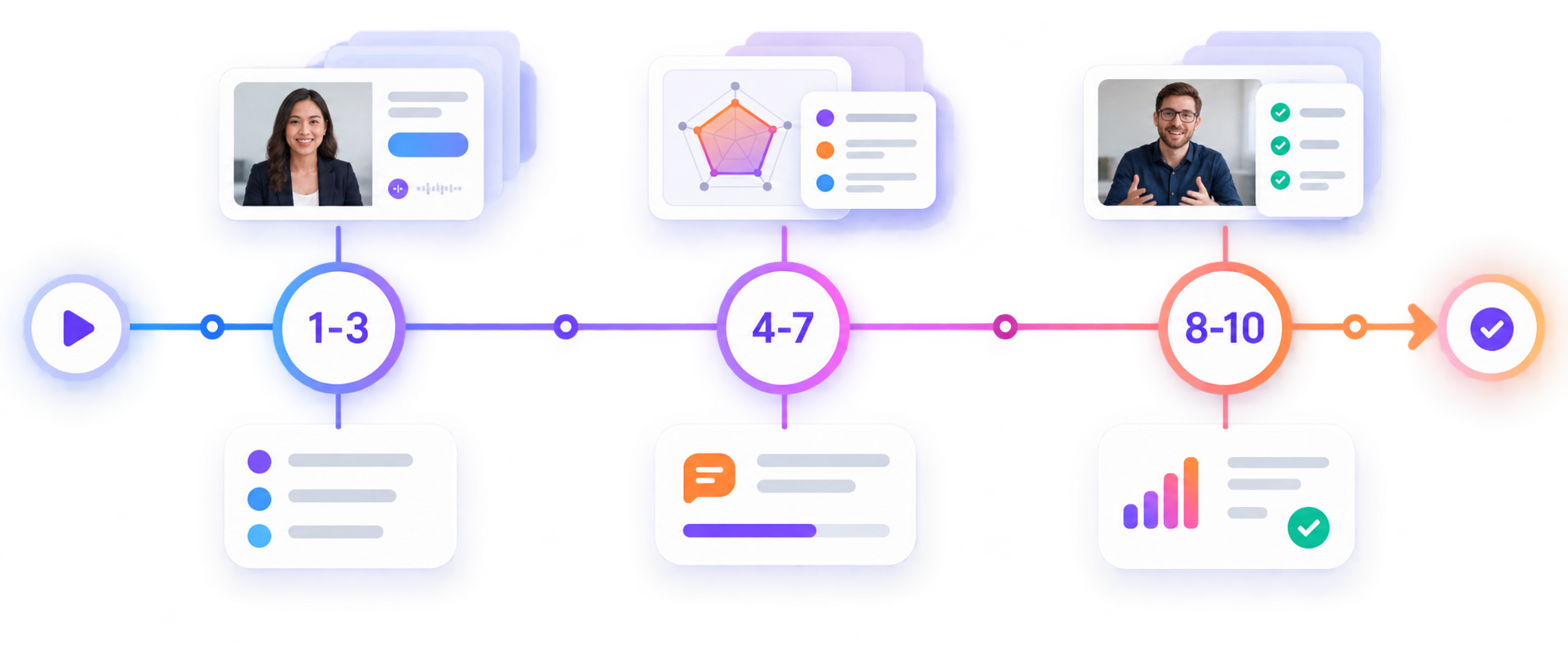
We are preparing the pilot for companies that want to train interviewers systematically on roles, rubrics, and realistic conversations.
Express pilot interest →